Doing and living in the Father’s Will
Dear Brothers and Sisters,
In this Sunday’s readings, Our Lord Jesus tells the parable of the two sons (Matthew 21:28-32). A father asks both of them to work in his vineyard. The first refuses but later changes his mind and goes. The second says, “Yes, sir,” but does not go. Our Lord Jesus then asks a simple but important question: “Which of the two did his father’s will?”
This parable teaches us that doing the Father’s Will is more than simply saying “yes” to God. Our faith must be translated into actions. The first son initially refused, but his change of heart led him to obedience. In this way, Our Lord Jesus teaches us something about conversion: even when we have resisted God, we can still turn around and choose to do His Will.
We pray for this every time we say the Our Father. The Catechism teaches us that the coming of God’s Kingdom is closely connected with Christ and the work of the Holy Spirit (CCC 2816). When we pray, “Thy Kingdom come” and “Thy will be done,” we are asking that God reign in us and that our actions become increasingly united with His purposes. Which is “Thy Kingdom come”.
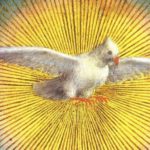
But how do we know and accomplish the Father’s Will? For this we need the help of the Holy Spirit. First of all, we do the Father’s Will whenever we fulfill the duties of our vocation in life. Second, we are called not only to do God’s Will but to live our lives united with our Lord Jesus Christ.
In the Catechism we read, “we ask the Father to unite our will to that of His Son, so as to fulfill his plan of salvation in the world”. (CCC 2860). We unite our human will by simply saying, “Lord, I give you my will”. Then the Holy Spirit enlightens our minds, forms our consciences, and give us the grace to put into practice what God asks of us. Doing God’s Will is therefore not simply a matter of knowing what is right; it means cooperating with the grace of the Holy Spirit and allowing Him to transform us a little by little through our daily and ordinary actions of our lives.
St. Therese of Lisieux helps us understand that this way of living does not always require extraordinary deeds. God’s Will is often found in the ordinary duties, relationships, sacrifices, and opportunities to love God with the simple blinking of an eye, the beating of our hearts, and every action of our being, as long as it not sinful every little act can give glory to God. St. Therese’s “Little Way” reminds us that small things, when done faithfully and with great love, can become a genuine response to God. These little actions have the power to glorify God and through them, He sanctifies us.
May the Holy Spirit give us the grace not only to do God’s Will but also to love Him and to be united to Him at every moment of our lives.
With Blessings,
+Fr. Gabriel Barrera.